
Duis mollis, est non commodo luctus, nisi erat porttitor ligula, eget lacinia odio sem nec elit. Morbi leo risus, porta ac consectetur ac, vestibu lum at eros. Nulla vitae elit libero, a pharetra augue.

Plan for the Future and Live Your Life Now
Plan today for a brighter tomorrow with a Personal Loan.
Do you want to study further, finance a side hustle or consolidate your debt? You can with a Rescue Finance Loan Personal Loan*. No waiting with easy online application and a decision in seconds.

Get a loan of up to R150 000 if you are employed and earn R2 000 or more
Easy online application
Decision in seconds and cash in your account within 24 hours of approval
Flexible repayment options
Choose a repayment term that suits you from 12 to 60 months – you decide!
Customer Protection Insurance
You are protected, in the event of death, loss of income, temporary or permanent disability with Customer Protection Insurance.
Low interest rates
Save on interest! You benefit from competitive interest rates.
Fixed repayments
You have peace of mind with fixed monthly repayments for the term of your loan

The Ultimate to Paying Off Student Loans
The South African Revenue Services (SARS) recently announced that it is now legal for its officials to hand over certain information of taxpayers to the National Student Financial Aid Scheme (NSFAS), to ensure that former students who are now taxpayers cannot dodge their loan repayments. According to NSFAS, at the end of March 2015 the scheme recorded a loan book with a cumulative value of R21.6 billion, and a fair value of R6.1 billion.
Motshabi Nomvethe, Technical Marketing Specialist at PPS, says that it is no surprise that graduates face financial challenges when it comes to paying back their student loans. “There can be many reasons for this, but the most common reasons usually include the high cost of education, the general increase in the cost of living and poor management of personal finances due to the lack of financial education. It is important that graduates who do take student loans out are aware of the costs involved and make sure they are informed about how to structure a repayment plan.”
According to Nomvethe, loan repayments play a huge part in sustaining the future of schemes such as NSFAS which provide financial aid for thousands of other young people who wish to obtain a tertiary education. “People need to keep in mind that when they do not repay their student loans they are withholding the opportunity of tertiary education from someone else in dire need of financial aid.”
She provides the below tips for graduates who are currently paying off their student loans:
1. Begin by drawing up a budget as soon as you graduate and start earning a salary to incorporate loan
repayments into your monthly expenses.
2. Aim to pay off the loan as soon as possible.
3. Understand how the loan is structured and keep track of the loan by knowing the balance, the interest
charges and repayment status at all times.
4. Do not be tempted to spend money on luxury, trendy items before paying the loan debt.
5. If you haven’t found employment, contact your creditors and inform them of your current situation, so that
alternative repayment arrangements can be made.
6. Don’t incur more debt during this period, and advisably even after the student loan is paid off.
7. Stay in touch with the lender by informing them of any change of address or contact details, as some
lenders do penalise borrowers if they fail to keep them informed of their current situation.
8. Keep the end and mind and stay focused. The sooner you pay off the debt, the sooner you can be
financially free and plan for the life that you want to live.
9. When in doubt, seek the advice of a reputable financial adviser who will assist you with the entire process.

Changing & Grow Business Faster and Better
How a loan can help you grow your business faster
Opening a small business is a dream come true, but it is also the start of many more challenges ahead. Beyond day-to-day work, a small business will eventually grow and will naturally have to take on loans and investments to do so.
The idea of a loan can be anxiety-inducing, but when done right, a loan can work to a small business owner’s advantage. Here’s what other small business owners have used their loans for:
To establish good credit
Most people immediately fear the shame that comes with the idea of debt, but an entrepreneurial mindset sees debt as a way to show banks and other similar establishments that one’s business is a trustworthy investment. Loans are always a way to develop good credit that allows one to take on bigger loans, better terms, and more flexibility to grow one’s business. While some risk is needed to take on these small loans, timing is everything to make this risk pay off. Like with personal savings, make sure you have 3-6 months of operating expenses as liquid before taking on a loan.
To give them room to innovate
While a sturdy organizational and operational infrastructure is a feature of excellent business, there has to be room for innovation. While ideally this comes with expansion, sometimes outside circumstances will require a business to change and evolve quickly. Taking on a loan buys owners time to be able to try out new channels for their business. This was prevalent during global lockdown in 2020, when new eateries and restaurants could not offer dine-in services. For some, loans helped them adapt to online channels to keep their businesses afloat until they were allowed to operate normally.
To get through emergency expenses
It isn’t enough to keep the business running. Part of running a business is preparing for the worst-case scenario. An emergency expense loan can help cover property and equipment repairs, operations during a seasonal slowdown, or even losses incurred in the event of an emergency or necessary restructuring.
Tip: You can lessen the fear and uncertainty with taking on a loan with the right insurance. Rescue Finance offers Group Credit Life Insurance with flexible and accommodating payment options. Avail of it today

Paying For Your Child’s Education
Why put your money in education plans?
Maybe you think it’s too early to start saving for your kid’s education. Maybe you think it’s too late. The truth is the best time to start saving for your child’s school fees and university costs is right now!The cost of education in South Africa can keep parents up at night. That’s why it’s so important to pick an education plan that aims to provide inflation-beating returns in the long term.
That means investing in a savings vehicle that provides capital growth (that’s growth for your money) over the medium- to long-term. The more time you have to invest your money the more time it has to grow. At Rescue Finance, we offer a variety of education plans to help your kids succeed at life – whatever they want to be when they grow up.
Okay, so you get the picture, now let’s explore your options
We know you don’t only want your child to be bright in class, you also want a bright financial future for yourself. Right? The feeling is mutual – we want all things bright. Our products are designed to make saving for education in South Africa simple and flexible. Have a look at our products and make saving for education fun.
Features | Tax Free Savings AccountGrow your savings without paying tax on the growth your money makes. | FutureInvest 4 EducationA fixed investment plan designed to help you save for education |
|---|
Flexible PlanAllows you to supplement your tax free savings or save for any other goals | Unit TrustsA highly flexible investment with a large selection of funds to choose from |
|---|
Credit not as great as you would like?
What is a credit report?
A credit report is a detailed overview of your credit history compiled by a credit bureau. For you, it’s a good way to monitor your financial health to ensure you’re on the right track. It’s especially good to check ahead of applying for credit. For a credit lender, it is used to assess your risk profile and credit worthiness.
What is a credit bureau?
A credit bureau is a company that collects data based on your credit history and accounts. In South Africa, there are 4 main credit bureaus:
- Experian
- TransUnion
- XDS (Xpert Decision Systems)
- Compuscan (now owned by Experian)
At Meerkat, we give our clients access to a FREE credit report compiled by Experian. Experian is a trusted credit bureau who have been in existence for more than 125 years.
All credit bureaus should be registered with The National Credit Regulator (NCR). Here is a list of all registered credit bureaus. According to the website, there are a total of 53 credit bureaus registered in South Africa.
How do I check all my debts?
You can use a credit report to check all your accounts or debts. A credit report should also give you information concerning:
- Your credit score
- A record of your payment of those debts (your payment history)
- Previous loan enquiries/ applications
- Credit limits
- Detailed overview of your accounts or debts (for example, credit cards, store/retail accounts, home loans etc)
- If you have any accounts that have been handed over for collection and any judgements that are against you
Insight: Credit reports will reveal slightly different information based on the credit bureau you request the report from. The reason for this is that not all credit lenders report the same information to all consumer reporting agencies (CRAs). CRAs here are companies such as Experian and TransUnion.
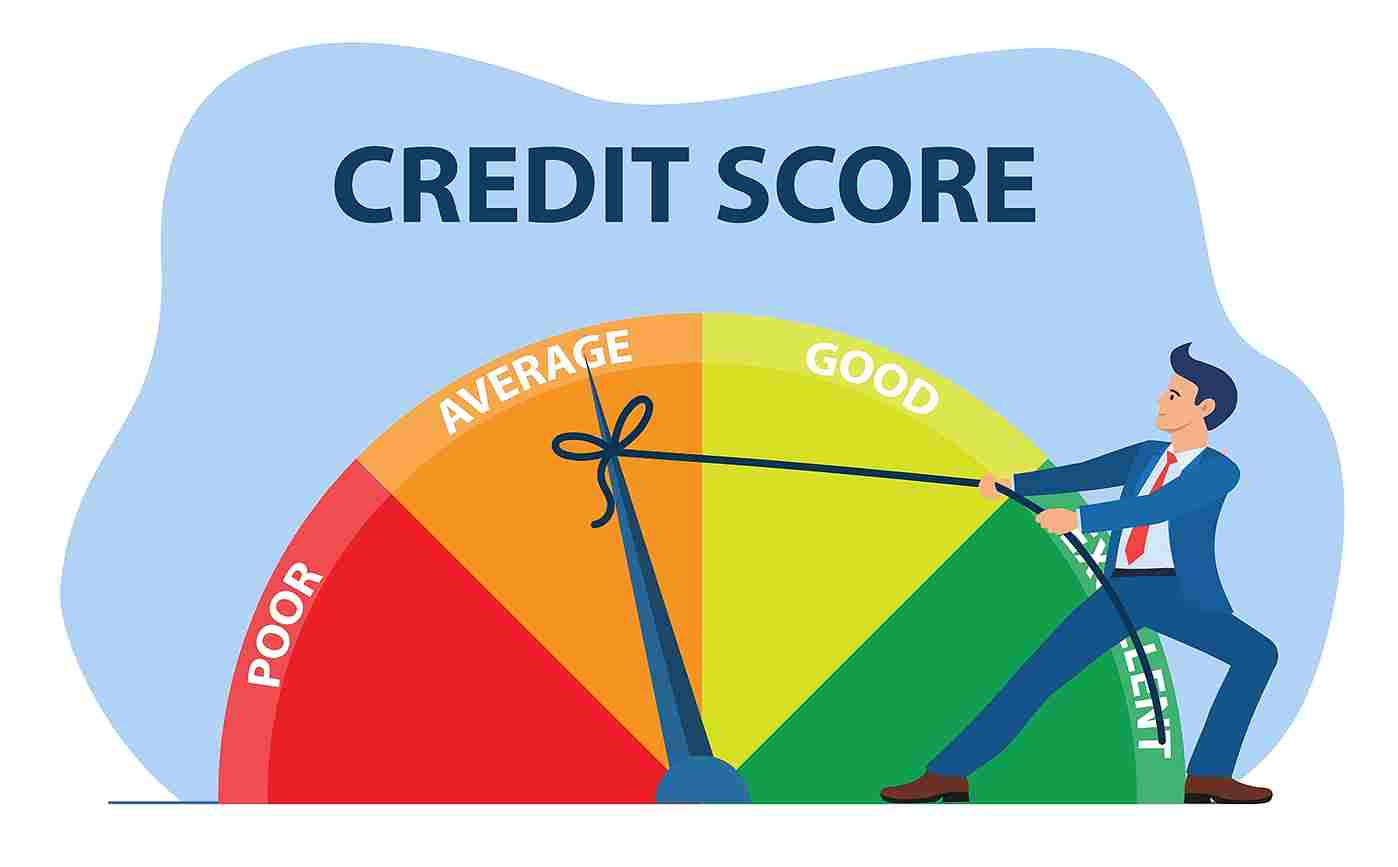
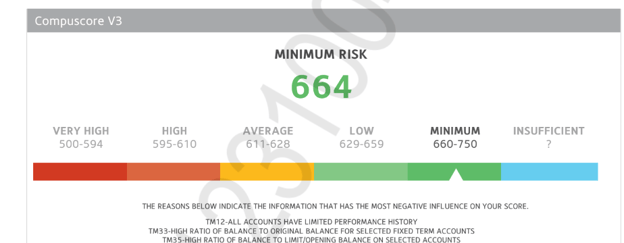
Credit score explained according to Experian’s scoring system
Individuals with a very high score are seen as a high credit risk for credit lenders or banks. If you have a very high score, this will work against you and your loan application may be rejected.
500 – 594 very high
595 – 610 high
611 – 628 average
629 – 659 low
660 – 750 minimum
Below is an image of an example of what your credit score could look like in your credit report
What’s a good credit score in South Africa?
A good credit score will depend on the credit bureau you are requesting information from. Different lenders and banks usually request credit reports from different and multiple credit bureaus. According to Experian’s credit scoring system, a good credit score would be anything from the average score (611-628) to the minimum (660-750).
It’s definitely in your best interest to regularly check your credit record (credit report). This will help you give you an idea of your risk profile according to banks and credit lenders.